Safety
When does electrical wiring need replacing?
A breaker that keeps tripping, warm sockets or a burning smell. How to tell that old wiring is no longer coping and what to do at that moment.
Published by: Andrii MatovkaPublished Updated 7 min read
In this article
- Warning signs you should not ignore
- Age of the installation and materials used
- Modern appliances and older wiring
- Is a repair enough or do you need a replacement?
- What does a replacement cost?
- A formal inspection (revize) as an objective basis
- What you can do yourself (and what you can't)
- How the assessment works
- Sources
Wiring has no fixed “expiry date” after which it must be replaced. What counts is its condition, how it was built and the load a household puts on it today. An installation that was perfectly fine thirty years ago may not have been designed for an oven, an induction hob, a dishwasher, air conditioning and an electric-car charger.
This article is not meant to frighten you. It should help you recognise warning signs and decide whether a repair is enough or a bigger intervention is due. Assessing a particular flat or house always belongs to a qualified electrician.
Warning signs you should not ignore
| Sign | What it may mean | What to do |
|---|---|---|
| The breaker trips often | An overloaded circuit, a faulty appliance or a fault in the wiring. | Do not fit a bigger breaker or bypass it. Have an electrician find the cause. |
| A socket or switch feels warm | A loose contact, overload or a worn device. | Stop using the socket and call an electrician. |
| Burning smell, darkened plastic | Overheated conductors or a device. | Switch off the breaker, stop using it and call an electrician at once. |
| Flickering or fluctuating lights | A loose connection, a faulty device, sometimes an issue on the supply side. | If it keeps happening, have the installation checked. |
| A tingle or jolt when touching something | Possible leakage current or missing protection. | Do not use the appliance or socket and call an electrician immediately. |
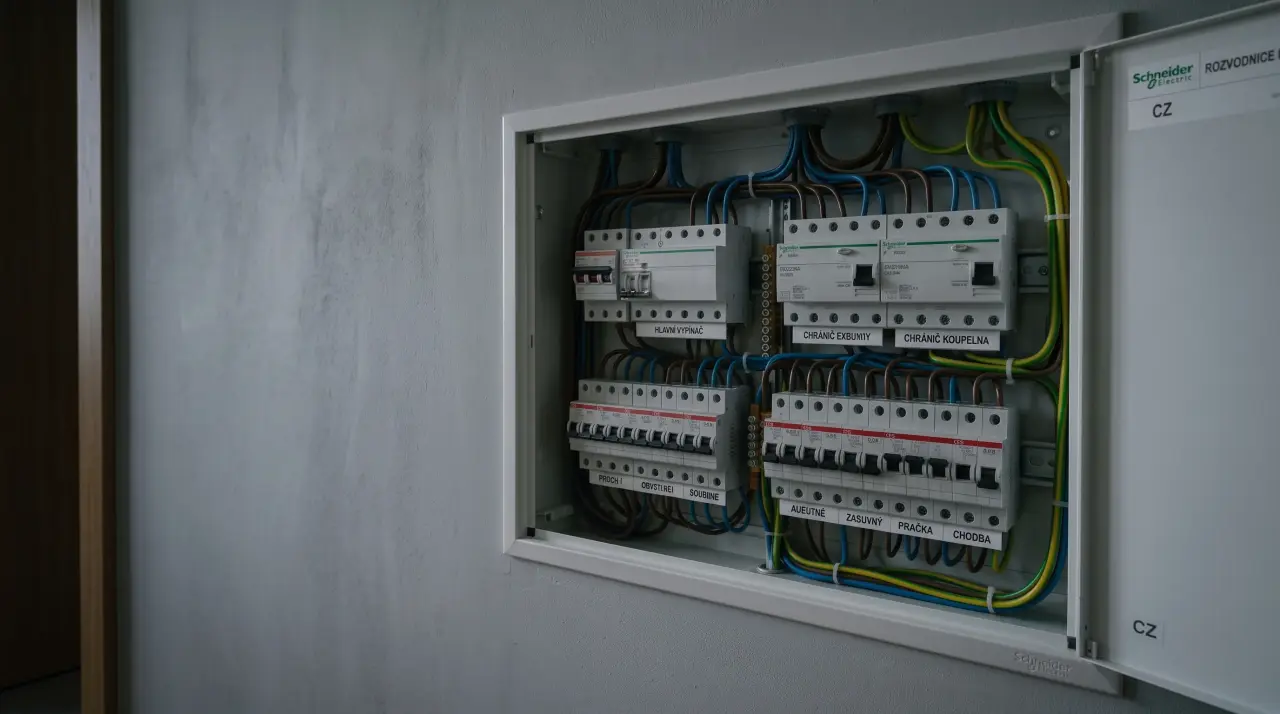
| Sockets without an earth pin, a board with fuses | An older design without today's level of protection. | Have it assessed: what can be added and what must be replaced. |
A breaker that only trips now and then does not necessarily mean outdated wiring. The possible causes, and what to do and what not to do, are explained in Why does the circuit breaker keep tripping? Common causes and when to call an electrician.
Age of the installation and materials used
Age alone is not a reason to replace anything, but it says a lot. In older houses and flats you may come across:
- aluminium wiring, which is harder to connect and may need extra care at the terminals over time,
- conductors with brittle insulation, which cracks mainly where the conductor bends or heats up,
- two-core wiring without a protective conductor, so the sockets lack today's level of protection,
- a board with fuses instead of breakers and without an RCD,
- wiring with few circuits, with too many appliances connected to them.
None of these automatically means danger, but each is a good reason to book a professional check. The electrician will assess the particular material, its condition and the options on site.
Modern appliances and older wiring
Wiring designed for a radio, a TV and a washing machine was not sized for the way we live now. The problem usually shows when you add:
- an induction hob, an oven and a dishwasher in the kitchen,
- air conditioning or a heat pump,
- a charging point for an electric car,
- more electronics on a single circuit.
If a new appliance lacks its own circuit or the board has little room, extending and supplementing the installation is often enough. Only when the wiring is in worse shape does it make sense to think about replacing all of it. Connecting the appliances comes only after it has been checked that the wiring can take the load.
Is a repair enough or do you need a replacement?
In general:
- Repair or addition: enough if the fault is isolated, the wiring is in good condition and has sufficient capacity.
- Partial replacement: makes sense if only one part is a problem, for example the board or a single room.
- Full replacement: justified if the entire wiring is worn, lacks adequate protection or cannot reasonably be extended. The scope and sequence of electrical installation always follow from a site assessment.
The decision should rest on an assessment and measurements, not on a guess. A good electrician will tell you what is necessary, what is advisable and what can wait.
For a complete replacement the same preparation helps as in a new build: a plan with the furniture, a list of appliances and spare capacity in the board. It is covered in Electrical installation in a new build: what to prepare before work starts?.
What does a replacement cost?
The price of a replacement cannot be set without a visit: it depends on the scope, the condition of the existing wiring, the number of circuits and whether the work is done in an empty flat or one where people live. What the price is made of and what raises it is explained in How much does electrical installation cost in a Prague apartment?, especially the part on replacing old wiring. I do not quote amounts; a visit and photos of the board give a more precise idea.
A formal inspection (revize) as an objective basis
An electrical inspection (revize) is a professional check and measurement that results in a report. It shows the condition of the installation and which faults need attention. An initial inspection (výchozí revize) is done on a new or substantially altered installation before it is put into operation. A periodic inspection of the installation in an ordinary flat is not required by Czech law; an obligation may arise, for example, from a rental or from the management of the building. Professional practice recommends a check about every five years in a normal environment, and in a more demanding one, say a damp one, the intervals are shorter (ČSN 33 1500). An inspection is especially useful when buying or letting a flat, after a major renovation or when dealing with an insurer. Only an inspection technician with a valid certificate may carry it out (Act No. 250/2021 Sb.); I do not perform electrical inspections (revize). Check the specific obligations with the building manager or an inspection technician; the sources are at the end of the article.
What you can do yourself (and what you can't)
- Observe and note: when and where the breaker trips and which appliances were on.
- Photograph the board and the problem spots from the outside. It helps during a phone consultation.
- Do not overload sockets with adaptors and extension leads, especially with high-power appliances.
- Do not tamper with the board or the wiring. Do not open sockets or replace breakers yourself.
How the assessment works
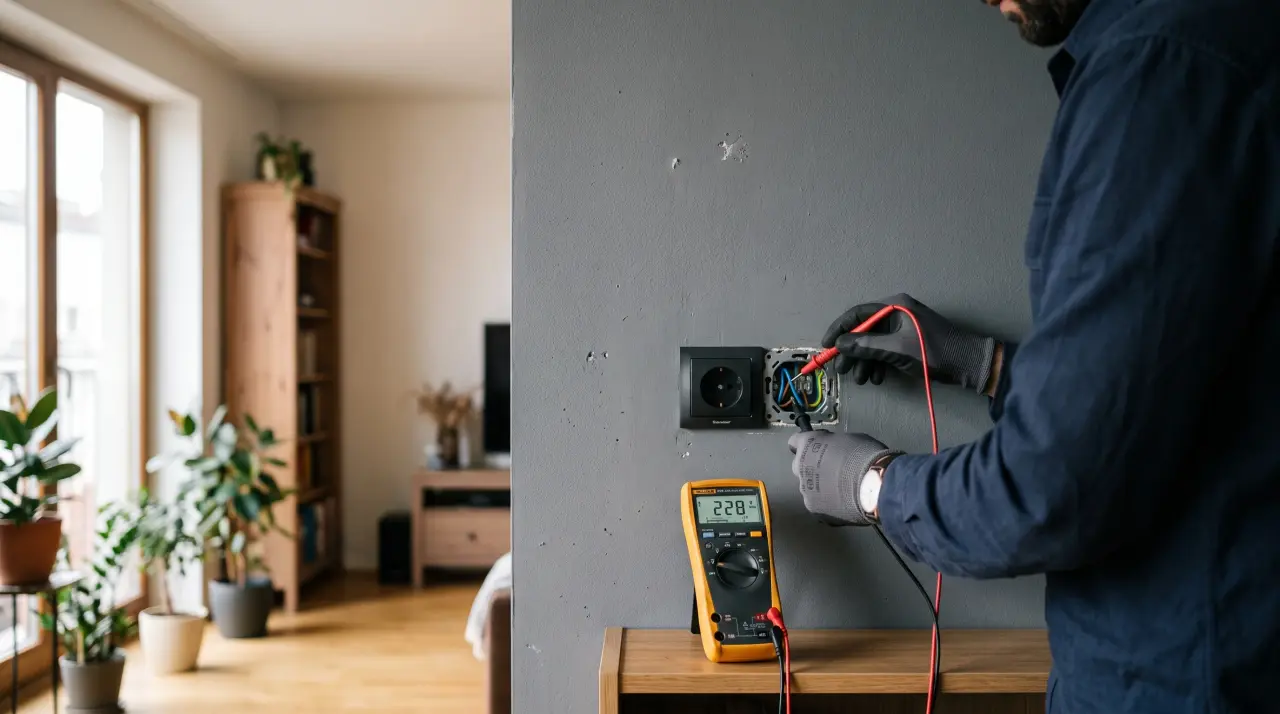
The electrician looks at the board, sockets and switches, asks about your appliances and any problems, and takes measurements where needed. The result is a proposed solution, from a small repair to a larger upgrade, and a quote in advance so you know what to expect and can decide. I handle faults under the Repairs and Faults service; what makes up the price of a bigger job is explained in How much does electrical installation cost in a Prague apartment? I work in Prague and the surrounding area (up to 100 km); who I am and what my projects look like is on the site, for example Electrical installation in an apartment. You can send a description of the problem and a photo of the board through the contact form.
Sources
The links lead to external sites (in Czech); ČSN standards are paid, so I do not quote them verbatim. Sources checked on 13 October 2026.